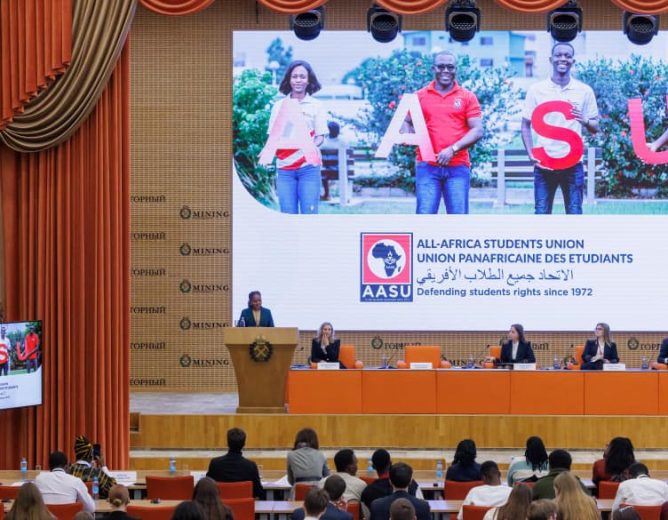
The All-Africa Students Union (AASU) is the umbrella organisation for all African students from the basic level to higher learning institutions and a very dominant force on the African Continent and beyond. With over 75 Member Unions across the Continent, AASU represents over 170 million students in Africa and the diaspora.
Since its inception in 1972, AASU now has a presence in 54 Countries in Africa. The Union played an important role in the struggle against colonialism in Africa and the ending of apartheid in South Africa. Today, AASU is at the forefront of the fights for equal access to quality education, quality assurance in higher education, harmonisation of higher education systems – with key emphasis on the mobility of academics and comparability of qualifications, democratic governance, defending students’ rights, promotion of gender equality and African culture, sustainable development, entrepreneurship, fostering of academic freedom, freedom of research and autonomy of higher institutions of learning, and the promotion of peace and democratic values, and other noteworthy objectives.
AASU’s core activities are focused on a broad range of issues that affect students, including but not limited to the 7 Strategic Priorities of the Union – Education & Students Rights, Capacity Building, Gender Advocacy, Environment & Climate Action, Pan-Africanism & African Culture, Migration & Mobility, Democracy & Good Governance. Our Strategic Priorities are fully aligned to the UN development priorities as articulated in the Sustainable Development Goals (SDGs). Also, these priorities complement the global efforts to build a relevant contemporary human capital capable of fitting into the global citizen ecosystem.
The Union is wholly student-run and student-led, autonomous, representative, and operates according to democratic principles.
In the year 2000, the UN awarded AASU in recognition of the Union’s efforts at advancing students’ rights and championing the democratisation of education across the African Continent. See: http://www.un.org/press/en/2000/20000410.dev2241.doc.html
AASU’s key strength lies in its diversity and numerical strength; which it employs as a bargaining tool to speak for the supreme interests of students at all times. The Union is made up of diverse students, regardless of their religion, gender, cultural background, political persuasion, ethnic origin or social standing.

The All-Africa Students Union (AASU) is the umbrella organisation for all African students from the basic level to higher learning institutions and a very dominant force on the African Continent and beyond. With over 75 Member Unions across the Continent, AASU represents over 170 million students in Africa and the diaspora.
Since its inception in 1972, AASU now has a presence in 54 Countries in Africa. The Union played an important role in the struggle against colonialism in Africa and the ending of apartheid in South Africa. Today, AASU is at the forefront of the fights for equal access to quality education, quality assurance in higher education, harmonisation of higher education systems – with key emphasis on the mobility of academics and comparability of qualifications, democratic governance, defending students’ rights, promotion of gender equality and African culture, sustainable development, entrepreneurship, fostering of academic freedom, freedom of research and autonomy of higher institutions of learning, and the promotion of peace and democratic values, and other noteworthy objectives.
AASU’s core activities are focused on a broad range of issues that affect students, including but not limited to the 7 Strategic Priorities of the Union – Education & Students Rights, Capacity Building, Gender Advocacy, Environment & Climate Action, Pan-Africanism & African Culture, Migration & Mobility, Democracy & Good Governance. Our Strategic Priorities are fully aligned to the UN development priorities as articulated in the Sustainable Development Goals (SDGs). Also, these priorities complement the global efforts to build a relevant contemporary human capital capable of fitting into the global citizen ecosystem.
The Union is wholly student-run and student-led, autonomous, representative, and operates according to democratic principles.
In the year 2000, the UN awarded AASU in recognition of the Union’s efforts at advancing students’ rights and championing the democratisation of education across the African Continent. See: http://www.un.org/press/en/2000/20000410.dev2241.doc.html
AASU’s key strength lies in its diversity and numerical strength; which it employs as a bargaining tool to speak for the supreme interests of students at all times. The Union is made up of diverse students, regardless of their religion, gender, cultural background, political persuasion, ethnic origin or social standing.

Membership of the All-Africa Students Union (AASU) comprises all national student unions across the 54 African Countries. The organization is also open to youth groups and all student groups(from primary to tertiary level) on the continent. (Senior High Schools, Universities, Polytechnics, Nursing Training Institutions, etc).
• West Africa • Southern Africa • East Africa • Central Africa • North Africa
For full membership list, see here…
Accra, 23 November 2025 - The All-Africa Students Union (AASU) wishes to formally announce the successful conclusion of the first phase of elections for the 14th Elective Congress, held on Saturday, 22 November 2025. In accordance with the AASU Constitution and the Electoral Guidelines of the 14th Elective Congress, the elections were conducted for offices for which candidates have been nominated by member organisations in good financial standing.



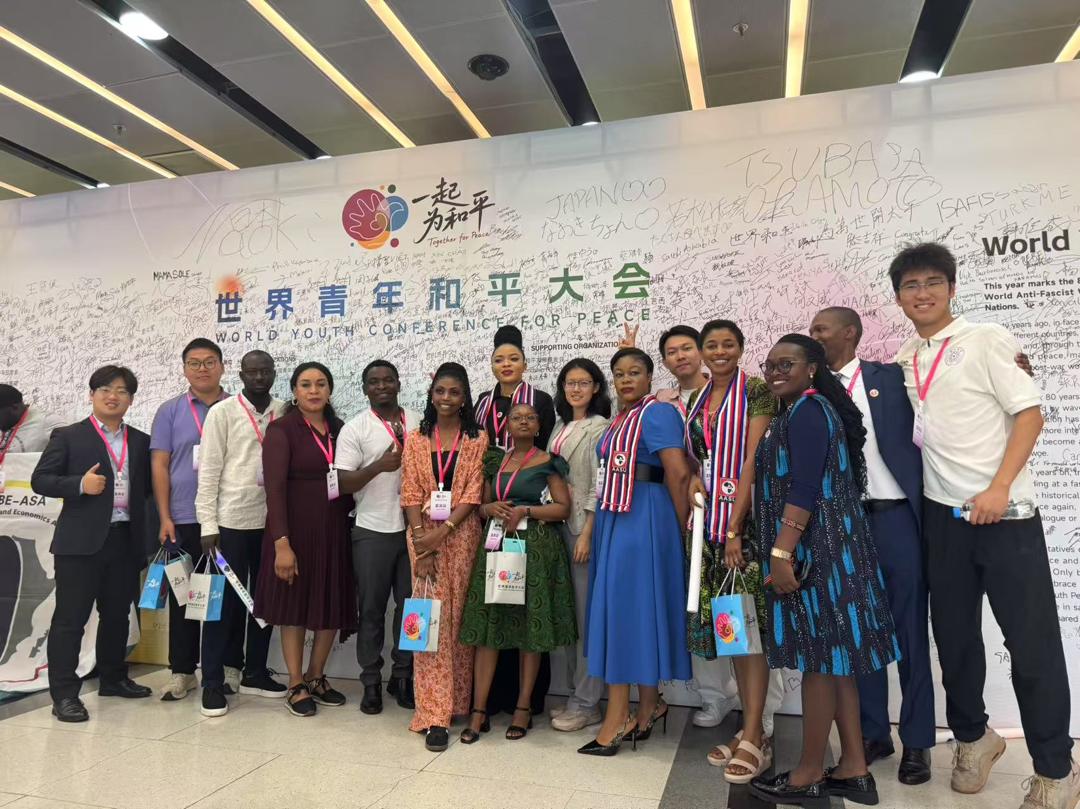
On 29 July 2025, the World Youth Peace Initiative was launched in Beijing, uniting voices from across continents. Representing African youth, AASU Secretary-General Peter Kwasi Kodjie joined global leaders in issuing a historic declaration for peace, unity, and sustainable development.

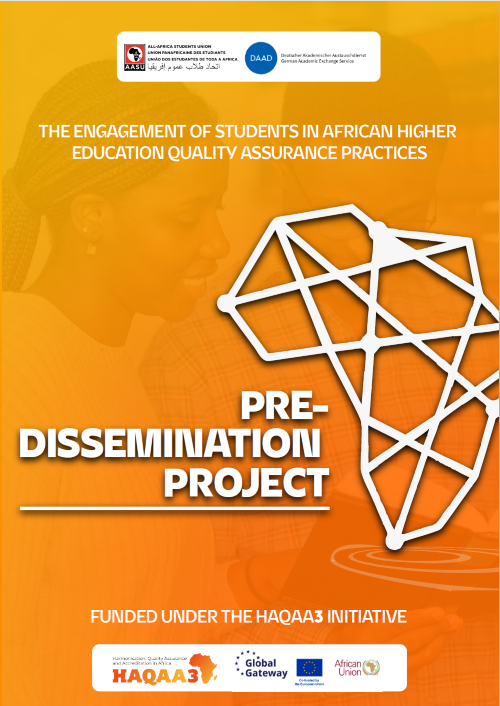
This groundbreaking report by the All-Africa Students Union (AASU), under the HAQAA3 initiative, provides the first continent-wide evidence on how students participate in quality assurance (QA) across African universities. Drawing insights from 26 African countries, it highlights both achievements and persistent gaps in ensuring that students are treated not just as beneficiaries, but as partners and co-creators in higher education governance. The study reveals that while student participation in internal QA (such as course evaluations) is growing, genuine influence in decision-making remains limited. It calls for systemic reforms—formal representation, capacity-building, and feedback mechanisms—to make African higher education more inclusive, responsive, and accountable.